


The Rise and Fall of the Roman Empire: From Augustus to the Byzantine Legacy

The Roman Empire remains one of the most fascinating and influential civilizations in world history. At its height around 117 CE, it was the most extensive political and social system ever seen in the Western world. Built upon the foundations of the Roman Republic, the empire became the largest and most powerful political and military force of its time — leaving a legacy that still shapes modern culture, law, and architecture.
⚔️ The Birth of an Empire: Augustus and the Pax Romana
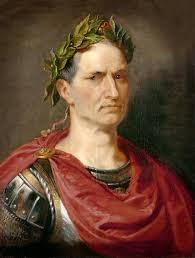
After the Battle of Actium (31 BCE), Gaius Octavian Thurinus—better known as Augustus Caesar—became the first Roman Emperor. Though Julius Caesar is often mistakenly called the first emperor, he was technically a dictator and never held the imperial title.
Under Augustus (27 BCE–14 CE), Rome entered a golden age known as the Pax Romana or “Roman Peace.” He famously said he “found Rome a city of clay but left it a city of marble.” Augustus expanded borders, improved laws, and initiated monumental building projects like the Pantheon, ushering in over 200 years of peace and prosperity.
The Julio-Claudian and Flavian Dynasties
Following Augustus came the Julio-Claudian emperors: Tiberius, Caligula, Claudius, and Nero. While Claudius expanded Rome into Britain, Nero’s erratic rule and eventual suicide in 68 CE ended the dynasty.
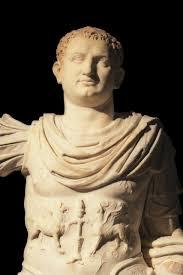
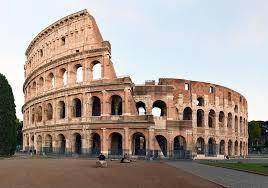
This chaos led to The Year of the Four Emperors (69 CE)—a period of civil war and instability—until Vespasian seized power and founded the Flavian Dynasty. His reign brought stability and monumental construction, including the Colosseum, completed by his son Titus. When Emperor Titus died suddenly of a fever in 81 CE, the throne passed to his younger brother Domitian (r. 81–96 CE). Domitian inherited a thriving empire and took immediate steps to strengthen and expand its borders.
Determined to restore Rome’s glory, he secured the frontiers, rebuilt large sections of the city damaged by the great fire, and continued the ambitious construction projects begun by his brother — including temples, roads, and monumental buildings that reshaped the Roman landscape. His economic reforms also stabilized the empire’s finances, improving trade and prosperity across the provinces.
Domitian, the last Flavian emperor, strengthened Rome’s borders but ruled as an autocrat, leading to his assassination in 96 CE.
The Five Good Emperors and Rome’s Golden Age
From 96 to 180 CE, Rome enjoyed unmatched stability under the Five Good Emperors:
- Nerva (96–98)
- Trajan (98–117) – expanded Rome to its greatest territorial extent
- Hadrian (117–138) – built Hadrian’s Wall in Britain
- Antoninus Pius (138–161) – ushered in peace and prosperity
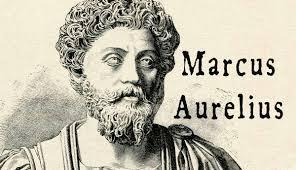
- Marcus Aurelius (161–180) – philosopher-king and Stoic writer
Under their leadership, the empire grew stronger, more stable, and more prosperous. Yet, with Marcus Aurelius’ death, the decline began.
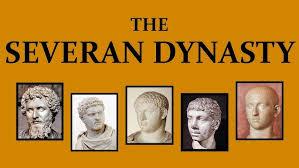
The Severan Dynasty and the Crisis of the Third Century
Commodus (180–192 CE), son of Marcus Aurelius, was infamous for corruption and self-indulgence. His assassination led to the short-lived rule of Pertinax and then Septimius Severus (193–211), founder of the Severan Dynasty.
The Severan emperors expanded citizenship under Caracalla, but their lavish spending and political corruption weakened the empire’s economy. By 235 CE, the assassination of Alexander Severus plunged Rome into chaos—the Crisis of the Third Century (235–284). Civil wars, invasions, and financial collapse nearly destroyed Rome.
Division of the Empire: East and West
Stability returned under Emperor Diocletian (284–305), who divided the vast empire into the Eastern and Western Roman Empires to improve governance. This system, known as the Tetrarchy, aimed to maintain order through shared power.
Yet after Diocletian’s retirement, civil wars erupted once again—culminating in the rise of Constantine the Great.
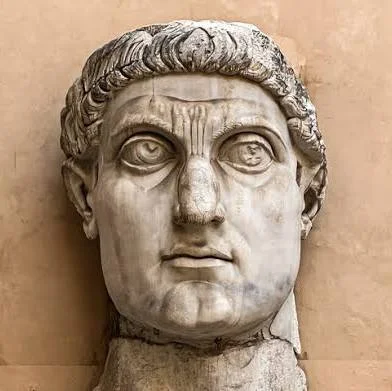
Constantine the Great and the Rise of Christianity
Constantine (306–337 CE) defeated Maxentius at the Battle of the Milvian Bridge (312 CE) and became sole ruler of the empire. He embraced Christianity, issuing the Edict of Milan (313 CE), which granted religious freedom and ended the persecution of Christians.
Constantine founded Constantinople (modern-day Istanbul) as his new capital—marking the dawn of the Byzantine Empire. He also oversaw the First Council of Nicaea (325 CE), which shaped Christian doctrine and established the foundation of the Bible.
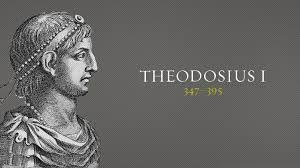
Theodosius I and the End of Pagan Rome
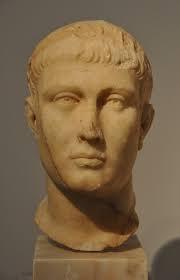
After Constantine’s successors fought over power, Theodosius I (379–395 CE) became the last emperor to rule both East and West. He declared Christianity the official religion of the empire in 380 CE, outlawed pagan practices, and closed ancient institutions like Plato’s Academy.
This shift ended centuries of state-sponsored paganism and forever changed the cultural and spiritual identity of Rome.
The Fall of the Western Roman Empire
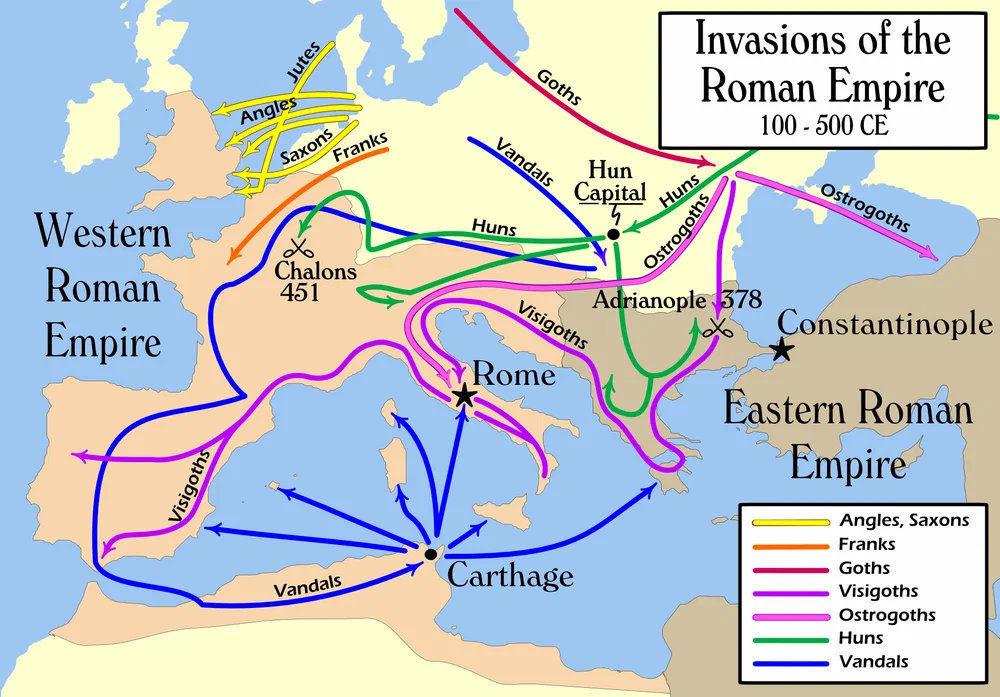
By the late 4th century, Rome faced relentless invasions from Goths, Huns, and other barbarian tribes. The catastrophic Battle of Adrianople (378 CE), where Emperor Valens was defeated, marked a turning point in Rome’s decline.
Historians debate the exact causes of the empire’s fall, but major factors include:
- Political instability and corruption
- Economic collapse and inflation
- Dependence on slave labour
- Barbarian invasions
- Overexpansion and weak military leadership
- Division between East and West
The Western Roman Empire officially fell on September 4, 476 CE, when Romulus Augustulus was deposed by the Germanic general Odoacer. Meanwhile, the Eastern Roman Empire, known as the Byzantine Empire, thrived until 1453 CE, when Constantinople fell to the Ottoman Turks.
The Enduring Legacy of the Roman Empire
Even after its fall, the Roman Empire’s influence continued to shape the world. The Holy Roman Empire (962–1806) sought to revive its grandeur, while countless modern institutions draw inspiration from Roman innovations.
Rome’s legacy includes:
- Engineering marvels like aqueducts, roads, and concrete
- Legal systems that inspired modern law
- Roman architecture and city planning
- The Julian calendar and modern month names
- Inventions like public toilets, locks, keys, newspapers, socks, and apartment blocks
- Cultural contributions in literature, medicine, and governance
The Roman Empire’s spirit lives on in modern society—its governance, infrastructure, and philosophy continue to influence how we live, work, and think.
Final Thoughts
The story of the Roman Empire is one of ambition, brilliance, excess, and transformation. From the reign of Augustus Caesar to the fall of Constantinople, Rome’s rise and fall remind us that even the greatest civilizations must evolve—or fade into history.

- News & Current Affairs
- Business & Economy
- Finance & Money
- Education & Learning
- Technology & Innovation
- Science & Environment
- Health & Wellness
- Food & Drink
- Home, Garden & Lifestyle
- Travel & Tourism
- Fashion & Beauty
- Art & Culture
- Entertainment & Media
- Sports & Recreation
- Personal Growth & Lifestyle
- Careers & Work
- Tutorials & How-To Guides
- Real Estate & Property
- Automotive
- Family & Relationships
- Environment & Sustainability
- Law & Legal Matters
- Gaming & Esports
- Religion & Spirituality
- Community & Local Voices
- Miscellaneous

 Arabic
 French
 Spanish
 Portuguese
 Deutsch
 Turkish
 Dutch
Dutch
 Italiano
 Russian
 Romaian
 Portuguese (Brazil)
 Greek
Greek
