


The Fascinating History of the Thermometer

Have you ever wondered how people used to measure temperature before our digital thermometers and smart devices existed? The story of the thermometer is full of curiosity, creativity, and a few “hot” breakthroughs that changed science forever.
Let’s travel back in time and see how this everyday tool came to be.
🔹 Before the Thermometer: The Thermoscope
Before the thermometer, there was the thermoscope — basically a thermometer without a scale. It didn’t give exact numbers but could show if something was getting hotter or colder. Think of it as the ancestor of the thermometer, just not very talkative yet!
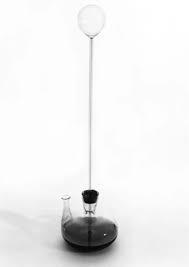
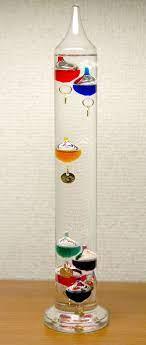
In 1593, the brilliant Galileo Galilei created one of the first water thermoscopes. His version used glass bulbs that floated or sank depending on the temperature. The floating bulbs had little tags showing different temperature levels — and this invention is still around today, known as the Galileo Thermometer.
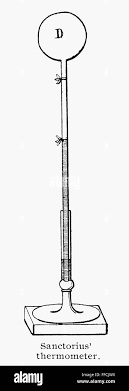
A few years later, in 1612, Santorio Santorio, an Italian inventor and physician, decided to take things further. He added a numerical scale to his thermoscope — making it one of the first attempts at a true thermometer. He even designed it to be used in a patient’s mouth! Unfortunately, it was bulky, slow, and not very accurate — but it was a start.
🔹 The First Sealed Thermometer
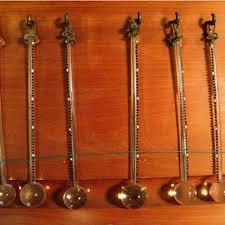
Fast forward to 1654, when Ferdinand II, Grand Duke of Tuscany, built the first enclosed liquid-in-glass thermometer. He used alcohol instead of water — a smart choice since alcohol reacts more sensitively to temperature changes. However, it still lacked a standard scale, so every thermometer gave slightly different readings. Imagine trying to bake a cake with that kind of guesswork!
🔹 The Fahrenheit Scale: A “Cool” Breakthrough
Now comes Daniel Gabriel Fahrenheit, a German physicist who changed the game in the early 1700s.
He invented the alcohol thermometer in 1709 and followed it up with the mercury thermometer in 1714, which was much more reliable. Then, in 1724, he introduced the Fahrenheit scale we still use in the U.S. today.
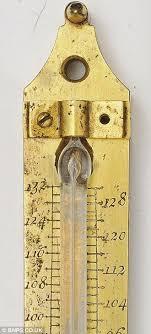
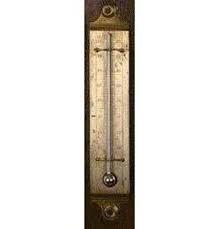
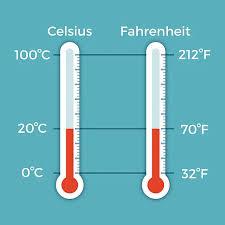
On his scale:
- Water freezes at 32°F
- Water boils at 212°F
- The scale has 180 degrees between freezing and boiling
Fahrenheit originally pegged 0°F as the coldest temperature he could create with a mixture of ice, water, and salt. He also thought the average human body temperature was 100°F (it was later adjusted to 98.6°F).
🔹 Celsius: The Simpler 0 to 100 System
In 1742, Swedish astronomer Anders Celsius introduced the Celsius scale, which he called “centigrade.” His system was beautifully simple — 0° for freezing and 100° for boiling.
This scale quickly became popular in science and across most of the world (except a few countries like the U.S.). In 1948, the name “Celsius” officially replaced “centigrade” at an international conference.
🔹 Lord Kelvin and the Quest for Absolute Zero
By the 19th century, scientists were obsessed with figuring out just how cold things could get. Enter Lord Kelvin in 1848, who took temperature measurement to the extreme — literally.
He developed the Kelvin Scale, which starts at absolute zero (0 K) — the coldest possible temperature, where all motion stops. Absolute zero equals –273°C.
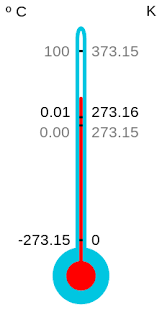
The Kelvin scale doesn’t use “degrees” and is mostly used by physicists and engineers to study energy and the behavior of matter at extreme temperatures.
🔹 Measuring Body Temperature: From Bulky to Brilliant
Of course, not all thermometers are used for weather or experiments — some are designed for us humans!
- 1612: Santorio Santorio’s mouth thermometer was the first attempt, but it was clunky and slow.
- 1600s–1700s: Doctors like Hermann Boerhaave, Gerard L.B. Van Swieten, and Anton De Haen started noticing that a patient’s temperature could reveal a lot about their illness. Unfortunately, not everyone believed them, and thermometers weren’t widely used yet.
- 1867: English physician Sir Thomas Allbutt changed that by inventing the first practical medical thermometer. It was portable (only 6 inches long) and could take a reading in just 5 minutes — a big deal at the time!
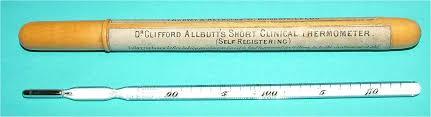
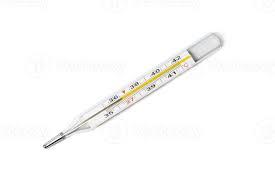
To make things easier, the mercury thermometer was later designed with a narrow bend, which held the reading in place after it was removed from the body. That’s why you had to shake the mercury thermometer before and after using it — to reset it to room temperature.
F. Mueller, B. Martin, J. Chandler, and R. Martin, back in 1973, patented the first digital thermometer, changing the way we measure temperature forever.
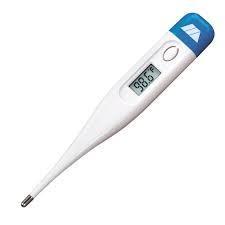
Their clever design featured a microchip that measures the electrical resistance of a metal. Since this resistance changes with temperature, the microchip converts that data into a digital readout—giving you an instant, easy-to-read result.
🔹 The Modern Era: Ear and Infrared Thermometers
Jump ahead to the 20th century, and things start heating up again — in a good way.
- During World War II, Theodore Benzinger, a scientist and flight surgeon, developed the ear thermometer.
- In 1984, David Phillips created the infrared ear thermometer, and Dr. Jacob Fraden (CEO of Advanced Monitors Corporation) made it famous with the Thermoscan Ear Thermometer — a name many households still recognize today.
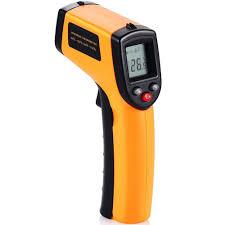
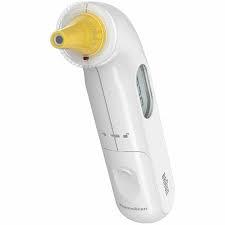
Thanks to these innovations, we can now measure our temperature in seconds — no mercury, no waiting, no shaking.
🔹 From Galileo to Digital: A Full Circle of Innovation
From Galileo’s floating bulbs to today’s instant digital thermometers, the story of temperature measurement shows how human curiosity never cools down.
Each inventor built upon the last, refining the tools that let us measure one of the most fundamental forces of nature: heat.
So next time you take your temperature, remember — you’re using the result of over 400 years of scientific creativity and persistence!

- News & Current Affairs
- Business & Economy
- Finance & Money
- Education & Learning
- Technology & Innovation
- Science & Environment
- Health & Wellness
- Food & Drink
- Home, Garden & Lifestyle
- Travel & Tourism
- Fashion & Beauty
- Art & Culture
- Entertainment & Media
- Sports & Recreation
- Personal Growth & Lifestyle
- Careers & Work
- Tutorials & How-To Guides
- Real Estate & Property
- Automotive
- Family & Relationships
- Environment & Sustainability
- Law & Legal Matters
- Gaming & Esports
- Religion & Spirituality
- Community & Local Voices
- Miscellaneous

 English
 Arabic
 French
 Spanish
 Portuguese
 Deutsch
 Turkish
 Dutch
Dutch
 Italiano
 Romaian
 Portuguese (Brazil)
 Greek
Greek
