


How Mushrooms Grow: From Tiny Spores to the Fresh Produce on Your Plate

Mushrooms are fascinating organisms, they grow with incredible speed, transforming in just days from microscopic spores to full, flavorful caps ready to harvest. Understanding how mushrooms grow gives you a deeper appreciation for these nutrient-dense, versatile fungi.
Let’s dive into the process.
How Mushrooms Grow
Mushrooms begin with tiny spores, far smaller than seeds. When these spores land on a nutrient-rich material—like decaying wood, straw, coffee grounds or compost—they germinate and form a delicate, thread-like network called mycelium. This underground network acts much like roots, spreading through and digesting the substrate.
Once environmental conditions shift—such as drops in temperature or changes in humidity—the mycelium is triggered to produce a mushroom, the above-ground fruiting body responsible for reproduction.
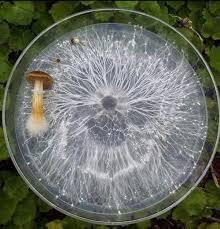
The Five-Step Process of Mushroom Growth
1. Spawn Production
Spores are collected and germinated on a sterile medium, often grain. This becomes the spawn, which is used to seed much larger quantities of growing material.
2. Substrate Preparation
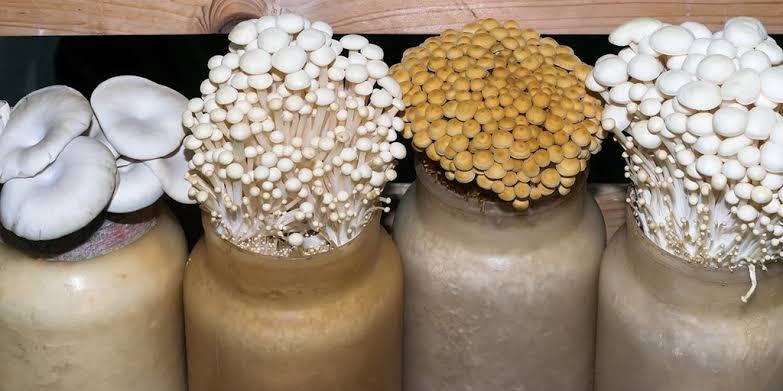
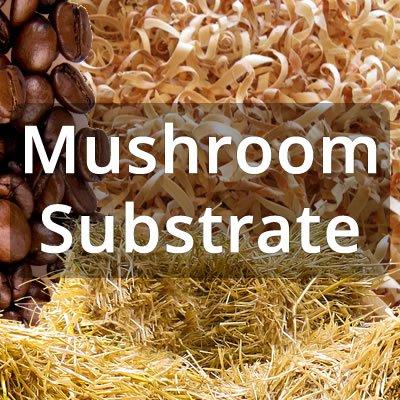
The substrate is the fungus’s food source. Common substrates include straw, sawdust, composted manure, or blends designed for maximum nutrition. The substrate is pasteurized to remove competing organisms before inoculation.
3. Growing Stage (Incubation)
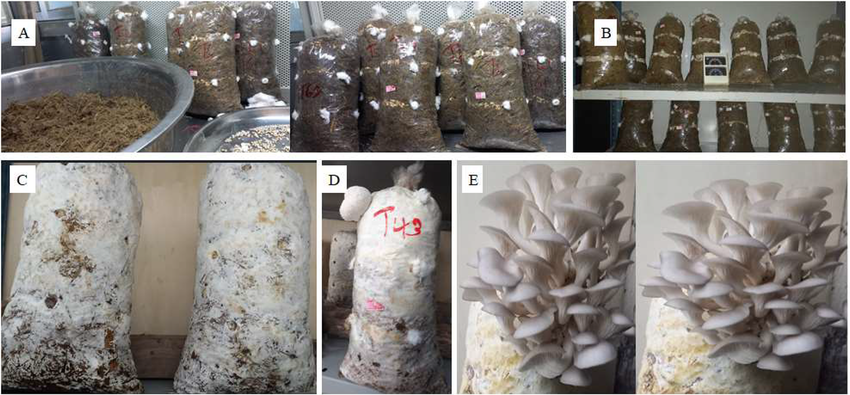
The spawn is mixed into the substrate and kept in a warm, controlled environment. For about three weeks, the mycelium expands, gradually colonizing the entire substrate. This stage is crucial—it’s where the fungal “roots” establish themselves.
4. Fruiting Stage
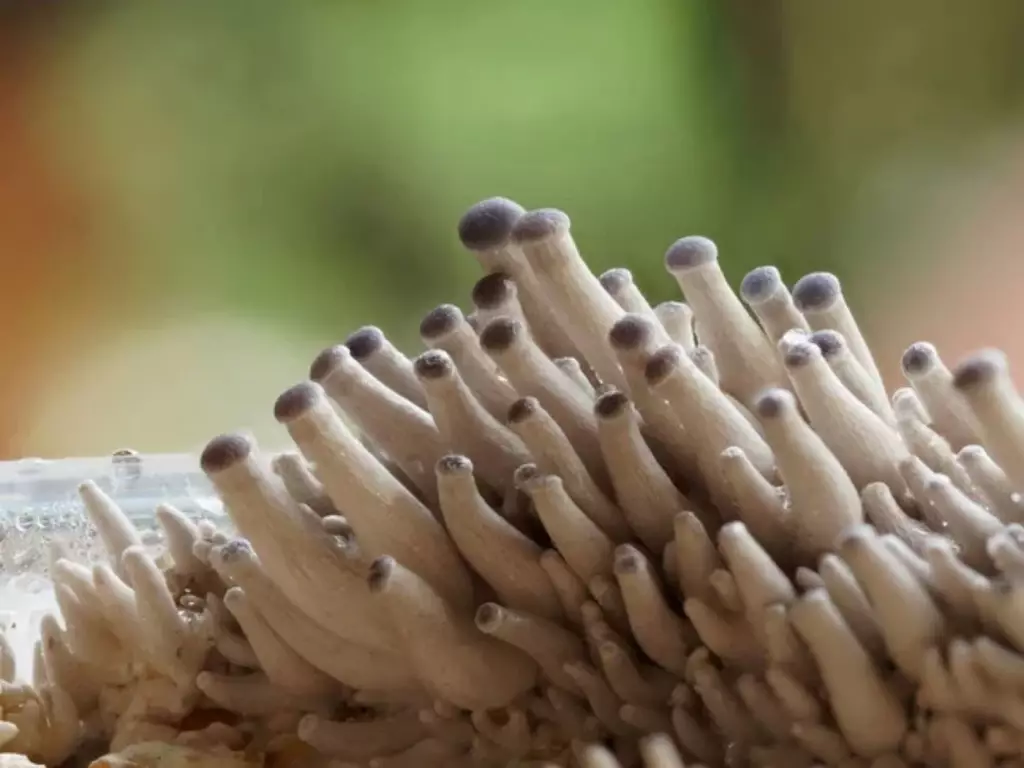
Once fully colonized, the environment is adjusted. Farmers lower the temperature—usually below 20°C—and fine-tune humidity and airflow. This subtle shift “tricks” the fungus into thinking it’s time to reproduce.
Tiny pins begin to form and soon develop into recognizable mushrooms. Within days they can double in size—growing nearly 4% per hour!
5. Harvesting
Mushrooms grow in flushes or cycles.
- First flush: 60% of the total yield
- Second flush: 30%
- Third flush: 10%
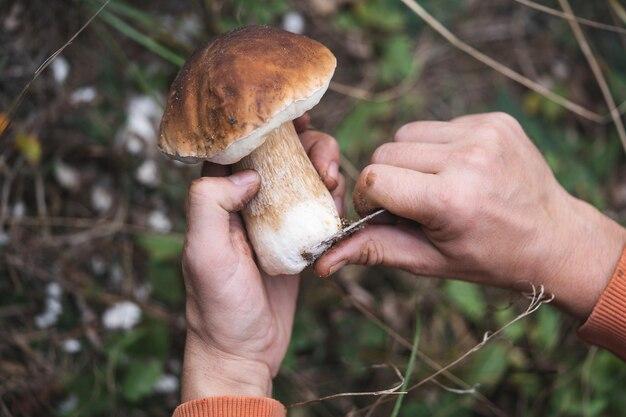
Each flush lasts about four to five days and is followed by a short resting period where new mushrooms reappear. Harvesting is done entirely by hand by twisting the stem upward and trimming it clean.
What Do Mushrooms Grow In?
Commercial mushrooms grow in around 22 cm (8 inches) of pasteurized substrate. Often this is a partially composted straw/manure mix, topped with a peat moss casing layer that helps maintain moisture and encourages fruiting.
The dark flecks you sometimes find on grocery store mushrooms? Just pieces of this peat moss—perfectly natural. A light brush or damp cloth removes them easily.
White, Cremini, Portabella: What’s the Difference?
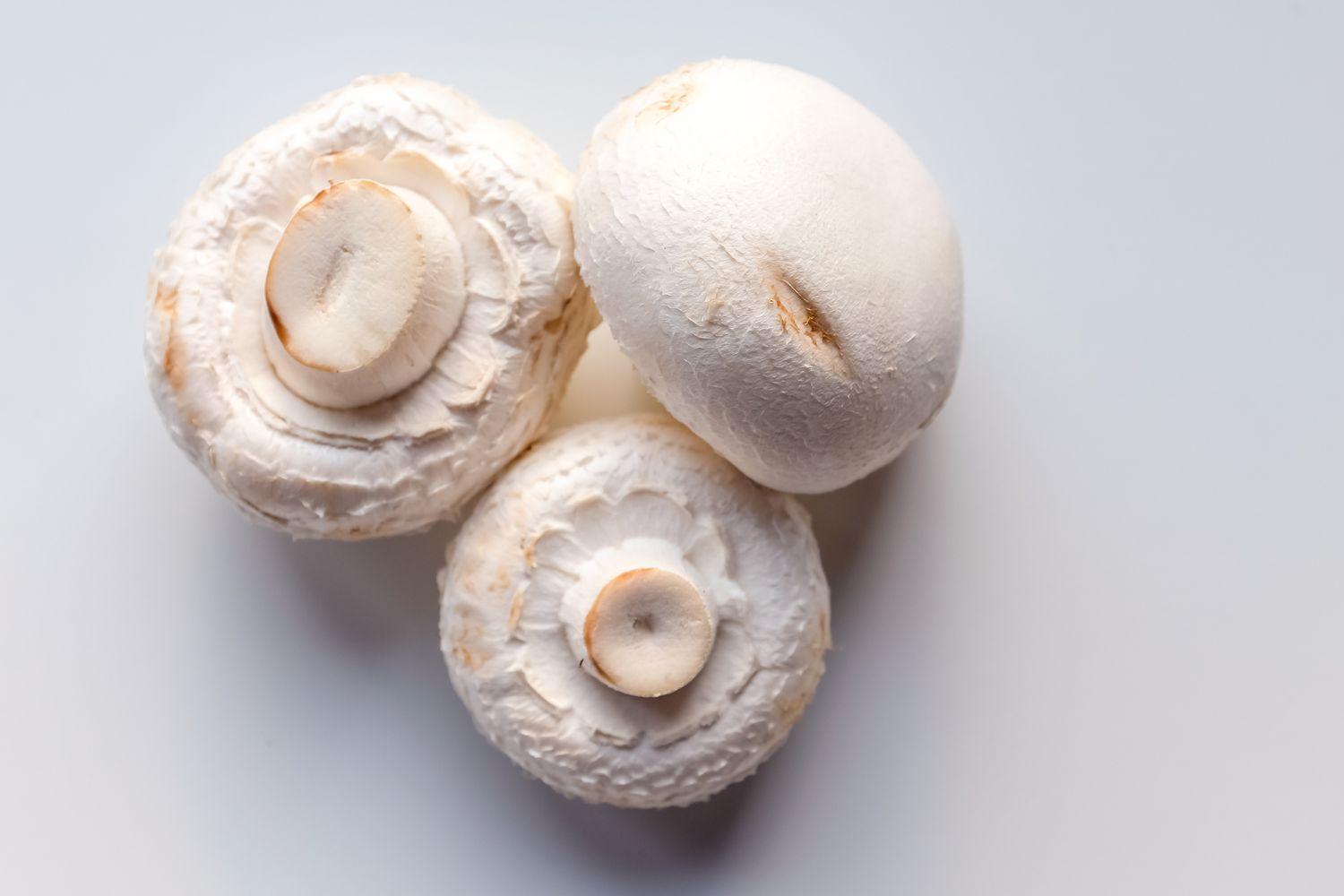
Interestingly, white mushrooms and brown mushrooms each belong to the same variety—they’re simply harvested at different sizes.
White Mushrooms
- Button
- Medium
- Large
Brown Mushrooms
- Cremini (Crimini): Small, about 5 cm
- Portabellini: Medium, about 7 cm
- Portabella: Large, fully mature
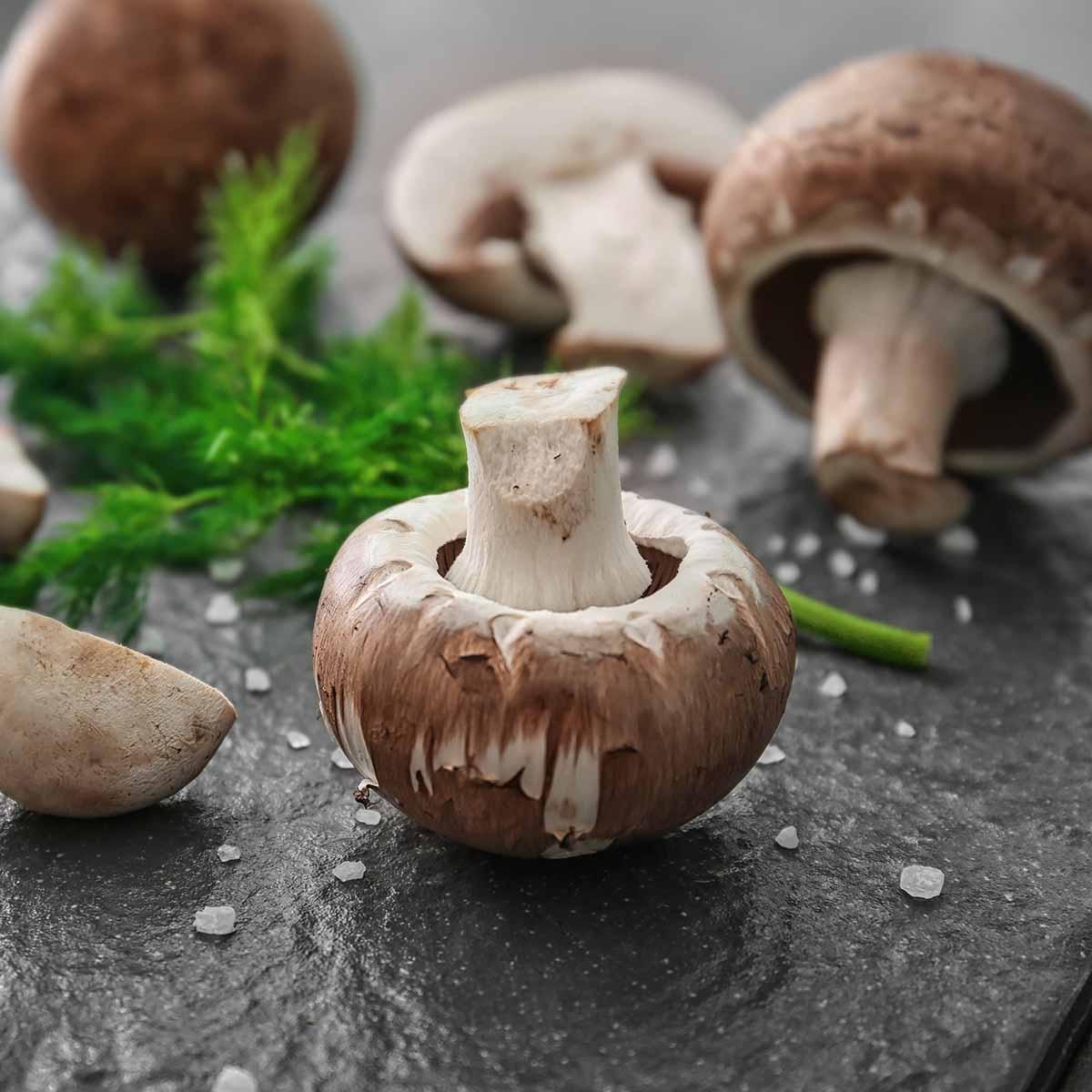
The difference in flavor between a small cremini and a large portabella comes down to one thing: the gills. As portabellas mature, their gills fully open, revealing rich, dark flesh that packs deeper, earthier flavor.
How Fast Do Mushrooms Grow?
Brown mushrooms grow incredibly quickly, doubling in size within 24 hours. Once they appear at the surface, they can be harvested in just four days—or left to grow into hearty portabellas.
The Ideal Environment for Growing Mushrooms
Despite the myths, mushrooms don’t require total darkness. What truly matters is a warm, humid, evaporative environment. Managing moisture, temperature, and airflow is far more important than whether the lights are on or off.
Final Thoughts
Mushrooms may not have roots, stems, or leaves—but they’re among the most efficient and fascinating organisms on Earth. From microscopic spores to dinner-table staples, their entire life cycle unfolds in just a few short weeks. Whether you’re a home grower, a foodie, or simply curious about what ends up on your plate, mushrooms offer a world of natural wonder.

- News & Current Affairs
- Business & Economy
- Finance & Money
- Education & Learning
- Technology & Innovation
- Science & Environment
- Health & Wellness
- Food & Drink
- Home, Garden & Lifestyle
- Travel & Tourism
- Fashion & Beauty
- Art & Culture
- Entertainment & Media
- Sports & Recreation
- Personal Growth & Lifestyle
- Careers & Work
- Tutorials & How-To Guides
- Real Estate & Property
- Automotive
- Family & Relationships
- Environment & Sustainability
- Law & Legal Matters
- Gaming & Esports
- Religion & Spirituality
- Community & Local Voices
- Miscellaneous

 English
 Arabic
 French
 Spanish
 Portuguese
 Turkish
 Dutch
Dutch
 Italiano
 Russian
 Romaian
 Portuguese (Brazil)
 Greek
Greek
