


The History of Valentine’s Day: From Ancient Rituals to Modern Romance

Every year on February 14, millions of people exchange flowers, chocolates, cards, and heartfelt messages in celebration of Valentine’s Day. But the holiday’s origins are far more complex than roses and romance. Its story blends ancient Roman rituals, early Christian martyrs, medieval poetry, and Victorian-era traditions.
The Mysterious Saint Valentine
The Catholic Church recognizes at least three different saints named Valentine (or Valentinus) who were martyred in the third century A.D.
The most popular legend centers on a Roman priest who defied Emperor Claudius II. Claudius reportedly believed single men made better soldiers and banned marriage for young men. Valentine secretly continued performing weddings. When discovered, he was executed around February 14.
Another tradition tells of Valentine sending a farewell letter to a young woman, possibly his jailer’s daughter, signed, “From your Valentine.” That phrase has endured for centuries.
In 496 A.D., Pope Gelasius I established February 14 as St. Valentine’s Day, possibly to replace or “Christianize” an existing pagan celebration.

Lupercalia: The Pagan Roots
Before it became a Christian feast day, mid-February was marked by Lupercalia, a Roman fertility festival held on February 15. Dedicated to Faunus, the god of agriculture, and to Romulus and Remus, the festival included rituals believed to promote fertility and purification.
Though historians debate how directly Lupercalia influenced modern Valentine’s Day, both traditions share themes of love, renewal, and early spring.
The Romantic Connection: Geoffrey Chaucer
Valentine’s Day was not linked to romantic love until the 14th century.
The turning point likely came from English poet Geoffrey Chaucer, who in his 1380s poem Parlement of Foules connected St. Valentine’s Day with the time birds choose their mates. This poetic association helped transform the day into a celebration of romance.
By the Middle Ages, Valentine had become one of the most popular saints in England and France, and love notes began appearing.
From Handmade Notes to Mass Production
By the 17th and 18th centuries, Valentine’s Day had become widely celebrated in England. People exchanged handwritten notes and small tokens of affection.
In the 1800s, improvements in printing technology led to the mass production of Valentine cards. In the United States, Esther A. Howland, often called the “Mother of the Valentine,” popularized decorative, lace-trimmed cards in the 1840s.
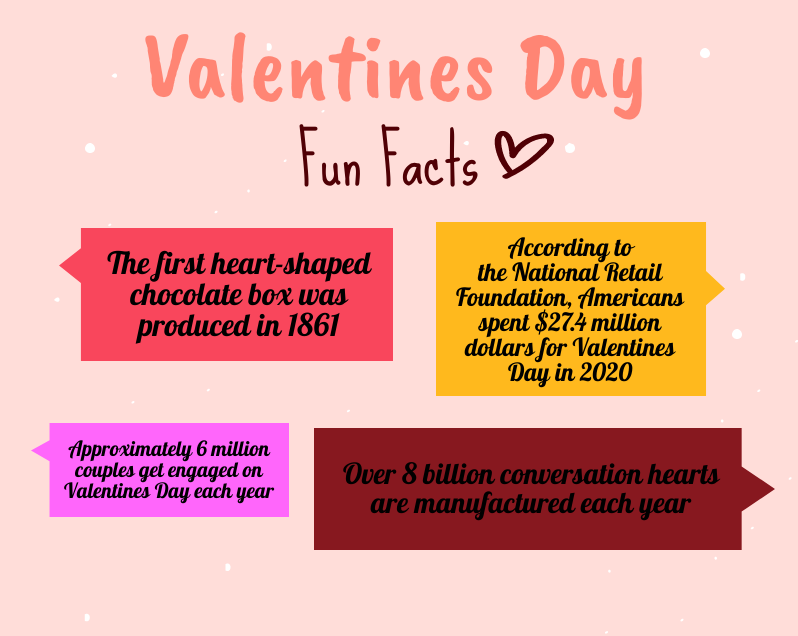
Today, over 145 million Valentine’s Day cards are exchanged annually, making it one of the most popular greeting-card holidays worldwide.

Cupid: The Symbol of Love
Cupid, often shown as a cherub with a bow and arrow, traces back to the Roman god of love, derived from the Greek god Eros. Originally depicted as a handsome young deity, he later evolved into the playful, winged child seen on modern Valentine’s Day cards.
Final Thoughts
Valentine’s Day is not simply a commercial holiday—it is the product of centuries of transformation. From Roman fertility rites to Christian martyrdom, medieval poetry, and Victorian sentimentality, February 14 has continually evolved.
At its heart, the holiday reflects something timeless: humanity’s desire to express love, connection, and affection.
Whether celebrated with grand gestures or simple words, Valentine’s Day reminds us that love—across history and culture—has always found a way to endure.


- News & Current Affairs
- Business & Economy
- Finance & Money
- Education & Learning
- Technology & Innovation
- Science & Environment
- Health & Wellness
- Food & Drink
- Home, Garden & Lifestyle
- Travel & Tourism
- Fashion & Beauty
- Art & Culture
- Entertainment & Media
- Sports & Recreation
- Personal Growth & Lifestyle
- Careers & Work
- Tutorials & How-To Guides
- Real Estate & Property
- Automotive
- Family & Relationships
- Environment & Sustainability
- Law & Legal Matters
- Gaming & Esports
- Religion & Spirituality
- Community & Local Voices
- Miscellaneous

 Arabic
 French
 Spanish
 Portuguese
 Deutsch
 Turkish
 Dutch
Dutch
 Italiano
 Russian
 Romaian
 Portuguese (Brazil)
 Greek
Greek
