


Giraffe (Giraffa camelopardalis): Africa’s Towering Browser

The Giraffe is the tallest land animal on Earth and one of Africa’s most iconic wildlife species. Its name is believed to come from the Arabic word xirapha, meaning “one who walks swiftly.” With its towering height, long legs, and graceful stride, the giraffe is unmistakable on the African savanna.
Physical Description
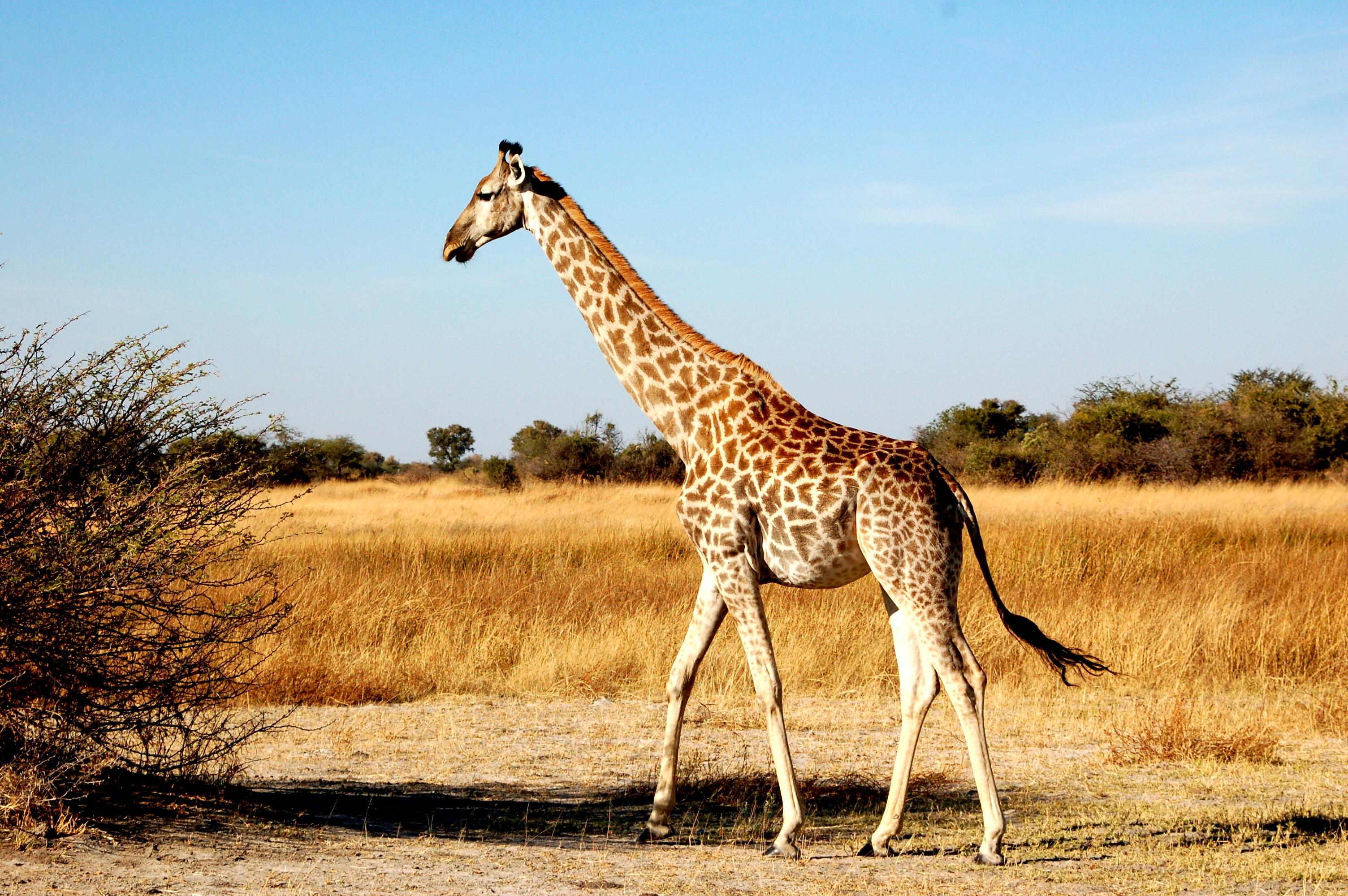
Giraffes are instantly recognized by their extraordinarily long necks and striking coat patterns. Their bodies are covered in large, irregular patches separated by light-coloured bands, forming a beautiful lattice pattern. Patch colours vary from light fawn to deep brown, and older bulls often appear much darker.
Both males and females have horn-like structures called ossicones on their heads, though these are more developed and thicker in adult bulls.
Three regional forms are often recognized in southern Africa:
- The Angolan giraffe (G. c. angolensis)
- The Southern giraffe (G. c. giraffa)
- Thornicroft’s giraffe (G. c. thornicrofti) of Zambia
Size:
- Males: Total length 4.6–5.7 m; height up to 5.2 m; weight 970–1,400 kg
- Females: Total length under 5 m; height up to 4.7 m; weight 700–950 kg
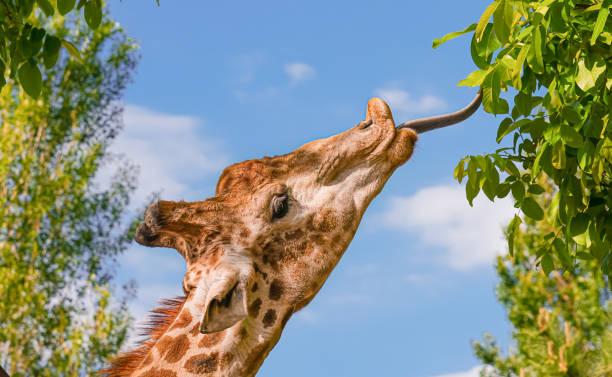
- Tongue length: Up to 45 cm
Distribution and Habitat
Historically widespread across sub-Saharan Africa, giraffes are now found in scattered and sometimes isolated populations. In southern Africa, populations occur in Mpumalanga and Limpopo provinces (South Africa), Mozambique, Zimbabwe, Namibia, Angola, and Zambia.
Many populations have been reintroduced into nature reserves and private game farms, sometimes outside their original historical range.
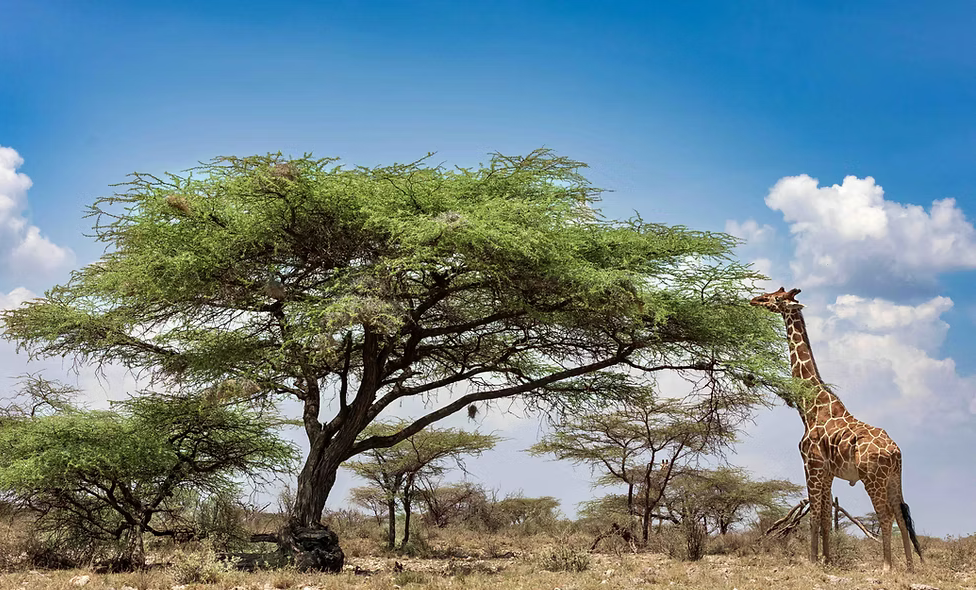
Giraffes favour dry savanna woodlands and areas rich in trees such as Vachellia and Senegalia (formerly Acacia), Commiphora, and Terminalia. Because they obtain much of their moisture from leaves, giraffes can live far from permanent water sources.
Behaviour and Social Structure
Giraffes are mostly diurnal but rest during the hottest midday hours. They roam large home ranges of 20–85 km² and do not defend strict territories.
They are usually seen in loose herds of 4–30 individuals. These groups are fluid, with members coming and going. Bulls associate with cows mainly during breeding.
Though often thought to be silent, giraffes communicate using infrasonic sounds beyond human hearing. They also grunt, snort, whistle (mothers to calves), bellow, and bleat. During courtship, males may emit a distinctive coughing sound.
Diet and Feeding
Giraffes are selective browsers, feeding mainly on leaves, shoots, and twigs from trees and shrubs. Their long necks give them access to foliage beyond the reach of other herbivores.
Using their prehensile tongue and flexible lips, they pull twigs into their mouths and strip leaves efficiently, even from thorny branches. They may spend 15–20 hours a day feeding.
Grass is eaten only occasionally.
Reproduction and Lifespan
Giraffes are polygynous, with dominant bulls guarding estrous females. Courtship involves the male performing a urine test known as flehmen, followed by ritualized behaviours before mating.
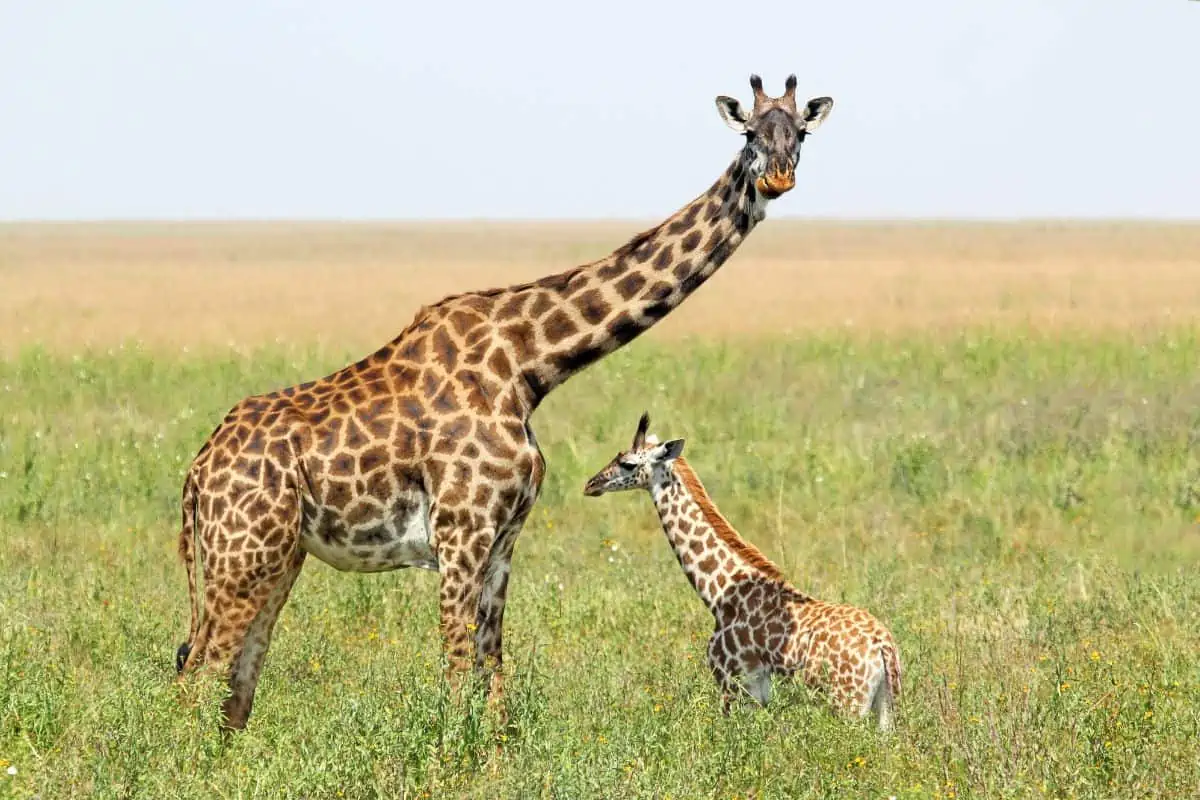
After a gestation period of about 450 days, the longest among ungulates, a single calf weighing up to 100 kg is born. Birth usually occurs during the dry season, and the calf drops nearly 2 metres to the ground. Within an hour, it can stand and walk.
Calves remain hidden for the first few weeks before joining nursery groups (crèches), where mothers take turns watching over the young. Calf mortality is high in the first year, sometimes reaching 70% in certain areas.
In the wild, giraffes may live up to 26 years, and in captivity over 36 years.
Predators and Defense
The primary predator of giraffes is the Lion, though leopards, hyenas, and crocodiles may prey on calves. Adult giraffes defend themselves with powerful front-leg kicks capable of killing large predators.
Their blotched coat also provides camouflage in wooded environments.
Conservation Status
Giraffe populations are stable in parts of eastern and southern Africa but have declined drastically in West Africa due to habitat loss and poaching. In countries such as Niger, giraffe conservation has become a priority.
Interestingly, giraffes have survived in some areas where other large mammals have disappeared, possibly because their height reduces direct competition with livestock.
Conclusion
Graceful, resilient, and ecologically important, the giraffe remains one of Africa’s most extraordinary animals. From its towering height to its gentle browsing habits, it symbolizes the beauty of the savanna. Continued conservation efforts are essential to ensure that future generations can witness this majestic giant roaming Africa’s landscapes.

- News & Current Affairs
- Business & Economy
- Finance & Money
- Education & Learning
- Technology & Innovation
- Science & Environment
- Health & Wellness
- Food & Drink
- Home, Garden & Lifestyle
- Travel & Tourism
- Fashion & Beauty
- Art & Culture
- Entertainment & Media
- Sports & Recreation
- Personal Growth & Lifestyle
- Careers & Work
- Tutorials & How-To Guides
- Real Estate & Property
- Automotive
- Family & Relationships
- Environment & Sustainability
- Law & Legal Matters
- Gaming & Esports
- Religion & Spirituality
- Community & Local Voices
- Miscellaneous

 English
 Arabic
 Spanish
 Portuguese
 Deutsch
 Turkish
 Dutch
Dutch
 Italiano
 Russian
 Romaian
 Portuguese (Brazil)
 Greek
Greek
