


Socrates: The Father of Western Philosophy
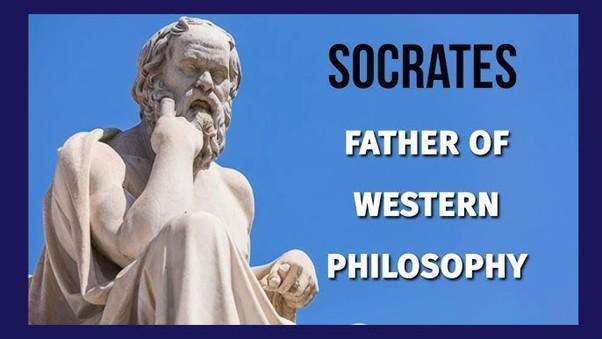
Socrates (c. 469–399 BCE) stands as one of the most influential figures in Western intellectual history. A philosopher from Athens, he transformed the direction of philosophy by shifting its focus from the natural world to ethics, logic, and the examination of human life.
Unlike many thinkers, Socrates wrote nothing. What we know about him comes primarily from his students, especially Plato and Xenophon. His life, teachings, and dramatic death have made him both a philosophical pioneer and a symbolic martyr for truth.
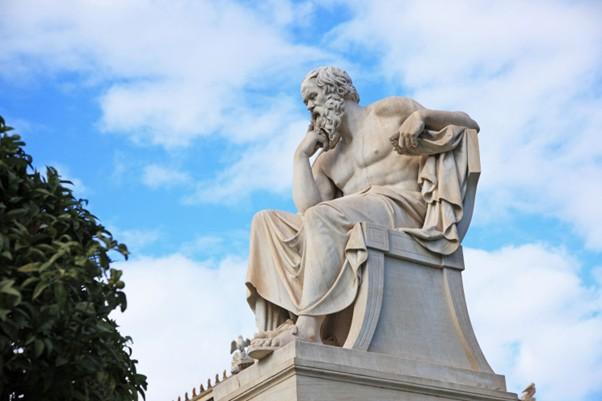
Early Life in Athens
Born around 469 BCE in Athens, Socrates was the son of Sophroniscus, a stonemason, and Phaenarete, a midwife. He received a traditional Greek education in music, poetry, and gymnastics and later served as a hoplite (heavily armed soldier) in the Peloponnesian War.
Accounts describe him as courageous in battle, enduring hardship with remarkable resilience. Yet it was not military service that defined him, it was his relentless questioning of life’s deepest ideas.
The Socratic Method: Question Everything
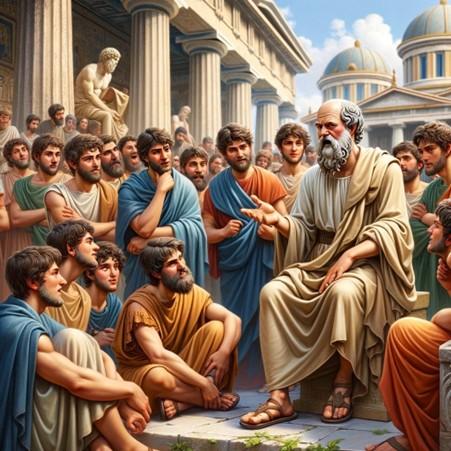
Socrates did not lecture or claim to possess wisdom. Instead, he asked questions, carefully, persistently, and sometimes uncomfortably.
This approach, now known as the Socratic Method, involved exposing contradictions in a person’s beliefs through dialogue. By questioning assumptions about justice, virtue, courage, and knowledge, Socrates guided others toward self-discovery.
One of his most famous statements, recorded in Plato’s Apology, declares:
“The unexamined life is not worth living.”
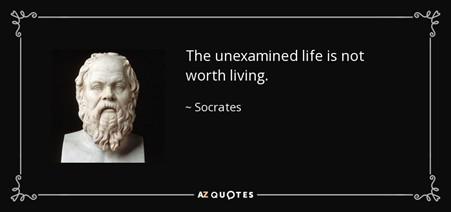
For Socrates, wisdom began with recognizing one’s own ignorance. This humility became the cornerstone of Western philosophy.
A “Gadfly” in Athens
Socrates’ habit of challenging politicians, poets, and craftsmen earned him a reputation as a “gadfly”, someone who stung the city into self-awareness.
He lived simply, often barefoot and indifferent to wealth or status. His unconventional appearance and refusal to flatter the powerful made him admired by some and resented by others.
Trial and Death
In 399 BCE, at about 70 years old, Socrates was charged with:
- Impiety (not honoring the gods of Athens)
- Corrupting the youth
During his trial, recorded by Plato, Socrates refused to abandon his philosophical mission. Though his friends arranged a possible escape, he chose to obey Athenian law.
He was sentenced to death and executed by drinking a cup of poisonous hemlock. Surrounded by his students, he faced death calmly, reinforcing his belief that virtue mattered more than life itself.
Legacy and Influence
Socrates’ greatest legacy lies not in written works but in influence. Through Plato, whose writings shaped the philosophical tradition, Socrates became the foundation of Western thought.
His ideas influenced:
- Ethics and moral philosophy
- Formal logic
- Political theory
- The development of systematic reasoning
Nearly every major school of ancient philosophy, from the Stoics to the Skeptics claimed him as an intellectual ancestor.
Final Thoughts
Socrates changed philosophy forever. He redirected inquiry inward, urging humanity to question assumptions, examine beliefs, and pursue virtue over comfort or popularity.
Though he left no books behind, his method of questioning remains alive in classrooms, courtrooms, and conversations worldwide.
His life reminds us that seeking truth may come at a cost, but the pursuit itself defines wisdom.


- News & Current Affairs
- Business & Economy
- Finance & Money
- Education & Learning
- Technology & Innovation
- Science & Environment
- Health & Wellness
- Food & Drink
- Home, Garden & Lifestyle
- Travel & Tourism
- Fashion & Beauty
- Art & Culture
- Entertainment & Media
- Sports & Recreation
- Personal Growth & Lifestyle
- Careers & Work
- Tutorials & How-To Guides
- Real Estate & Property
- Automotive
- Family & Relationships
- Environment & Sustainability
- Law & Legal Matters
- Gaming & Esports
- Religion & Spirituality
- Community & Local Voices
- Miscellaneous

 English
 Arabic
 French
 Spanish
 Deutsch
 Turkish
 Dutch
Dutch
 Italiano
 Russian
 Romaian
 Portuguese (Brazil)
 Greek
Greek
