


Honeybush Tea: South Africa’s Naturally Sweet Herbal Treasure
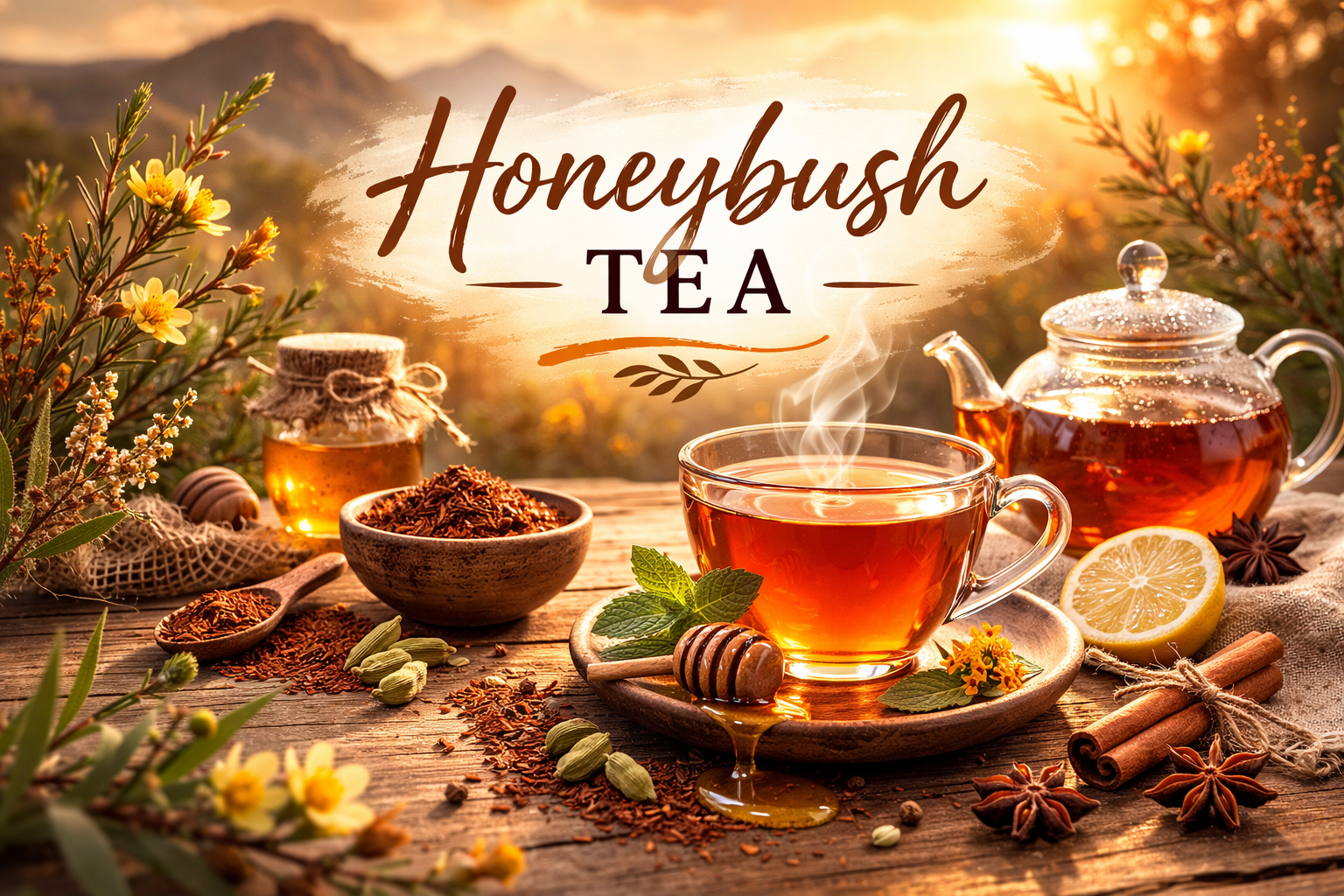
Honeybush (Cyclopia species) is a naturally sweet, caffeine-free herbal tea native to South Africa’s Fynbos region. Traditionally used by the indigenous Khoisan people for centuries, this fragrant tea is valued for its soothing properties and rich antioxidant profile, particularly compounds like mangiferin, xanthones, and flavanones.
With its honey-like, floral flavor and gentle nature, honeybush has become a popular wellness tea both locally and internationally.

Nutritional Profile
Honeybush tea contains:
- Trace minerals such as iron, calcium, magnesium, potassium, zinc, and manganese
- Antioxidant compounds including xanthones and flavanones
- Pinitol, known for potential metabolic benefits
A standard cup contains:
- 0 calories
- 0 fat
- 0 carbohydrates
- 0 sugar
(Adding milk or sweeteners will increase calorie content)
Uses
Culinary Uses
Honeybush can be infused into milk for ice cream, added to smoothies, used in kombucha, or blended into chai-style drinks with warming spices.
Herbal Tea
Most commonly enjoyed as a hot or iced infusion, honeybush offers a smooth, naturally sweet taste without bitterness, even if steeped longer.
Skin Care
Extracts are included in creams and lotions for moisturizing, improving elasticity, and supporting skin aging concerns.
Health Benefits of Honeybush
Respiratory Support
Traditionally used to relieve coughs, colds, and bronchitis. It contains pinitol, a natural expectorant that helps loosen mucus and soothe the throat.
Digestive Comfort
Used historically to ease stomach cramps and support gentle digestion.
Rich in Antioxidants
Honeybush contains powerful polyphenols like mangiferin and hesperidin that help combat oxidative stress and protect cells.
Blood Sugar Support
Early research suggests honeybush polyphenols and pinitol may help improve insulin sensitivity and stabilize blood sugar levels. While promising, more human studies are needed.
Heart Health
Preliminary studies show potential benefits for improving cholesterol balance, supporting blood vessel function, and reducing inflammation.
Menopausal Support
Honeybush contains phytoestrogens (plant compounds that mimic estrogen), which may help ease hot flashes and support bone health.
Immune & Anti-Inflammatory Support
Its antioxidant content contributes to immune health and may help reduce inflammation in the body.
Caffeine-Free & Low Tannin
Unlike black or green tea, honeybush contains no caffeine and very low tannins, making it gentle on the stomach and ideal for evening enjoyment.

How to Prepare Honeybush Tea
- Boil water and let it cool for 1–2 minutes.
- Add 1–2 teaspoons of loose honeybush (or one tea bag) per cup.
- Pour over 250 ml of hot water.
- Steep for 5–7 minutes (up to 10 minutes for more antioxidants).

Because it’s low in tannins, honeybush won’t turn bitter if steeped longer. Enjoy plain, with milk, or with spices like cinnamon, ginger, or cardamom.
Cultural & Environmental Significance
Honeybush has deep roots in South African heritage, particularly among the Khoi and San communities. It grows naturally in the Western and Eastern Cape’s Fynbos biome. Today, sustainable farming practices are increasingly used to protect wild populations from over-harvesting.
Safety
Honeybush is considered very safe, with no widely reported side effects. As with all herbal remedies, individuals with specific medical conditions should consult a healthcare provider before regular use.
Final Thoughts
Honeybush tea is more than a pleasant, naturally sweet beverage, it’s a culturally rich herbal infusion with promising health benefits. While scientific research continues, its antioxidant properties, caffeine-free nature, and gentle taste make it an excellent daily wellness tea.
Whether you enjoy it for relaxation, digestion, immune support, or simply its comforting flavor, honeybush is a beautiful example of South Africa’s botanical heritage.


- News & Current Affairs
- Business & Economy
- Finance & Money
- Education & Learning
- Technology & Innovation
- Science & Environment
- Health & Wellness
- Food & Drink
- Home, Garden & Lifestyle
- Travel & Tourism
- Fashion & Beauty
- Art & Culture
- Entertainment & Media
- Sports & Recreation
- Personal Growth & Lifestyle
- Careers & Work
- Tutorials & How-To Guides
- Real Estate & Property
- Automotive
- Family & Relationships
- Environment & Sustainability
- Law & Legal Matters
- Gaming & Esports
- Religion & Spirituality
- Community & Local Voices
- Miscellaneous

 English
 Arabic
 French
 Spanish
 Portuguese
 Deutsch
 Turkish
 Dutch
Dutch
 Italiano
 Russian
 Romaian
 Portuguese (Brazil)
