


Napoleon Bonaparte: From Revolutionary General to Emperor of Europe

Napoleon Bonaparte was neither purely a hero nor simply a villain. He was a brilliant military commander and reformer who modernized France through lasting institutions like the Napoleonic Code, promoted merit over birth, and strengthened education and government administration. These reforms influenced legal and political systems across Europe.
At the same time, Napoleon ruled as an authoritarian emperor and pursued relentless expansion through war. His ambition plunged much of Europe into conflict, causing millions of deaths and widespread suffering. He also reintroduced slavery in French colonies and upheld laws that limited women’s rights, embedding inequality into his legal system.
Napoleon’s legacy is therefore a blend of progress and destruction. He reshaped Europe through reform and conquest, making him one of history’s most influential, and controversial, leaders. Reducing him to simply “good” or “bad” oversimplifies a life defined by both achievement and tragedy.
Early Life and Military Beginnings
Napoleon was born on August 15, 1769, in Ajaccio, Corsica, shortly after the island became part of France. His family belonged to minor nobility but had limited wealth. As a boy, he was sent to mainland France for schooling and later trained at a military academy, graduating in 1785 as an artillery officer.
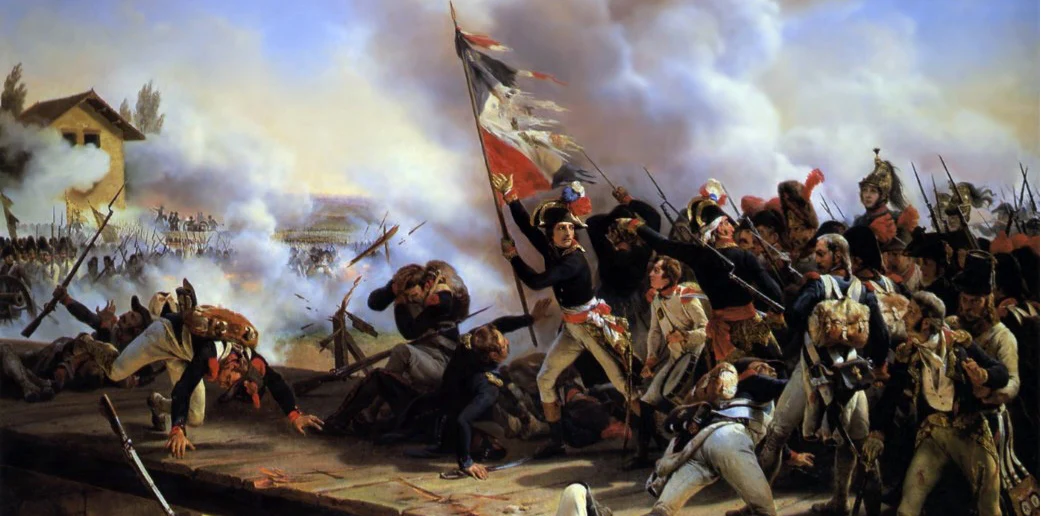
When the French Revolution erupted in 1789, Napoleon supported the revolutionary cause. His talent quickly became apparent, and in 1793, he gained national attention for helping recapture the city of Toulon from royalist forces. Two years later, he crushed a royalist uprising in Paris, securing his reputation and promotion.
Rise to Power
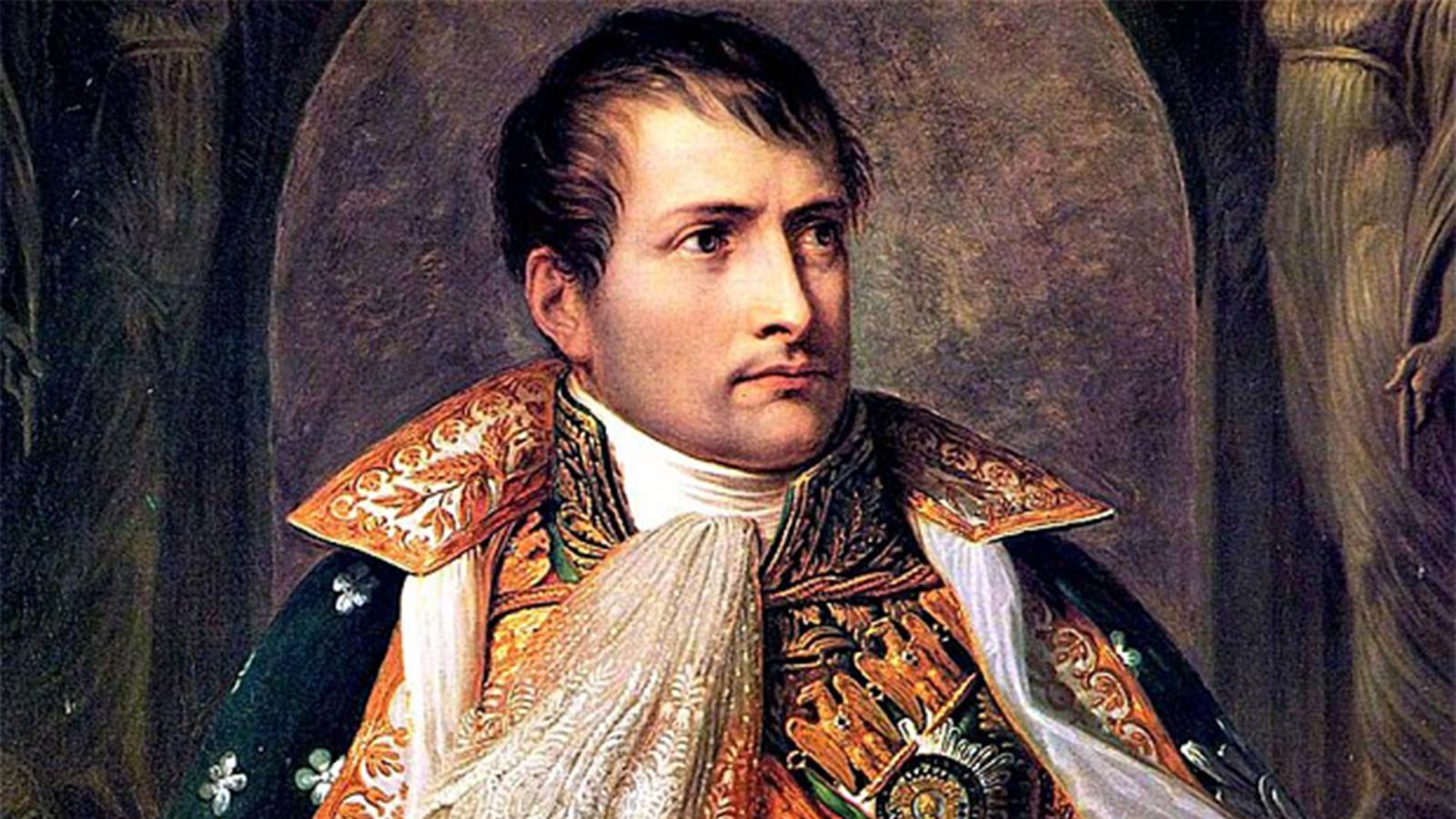
Napoleon’s success in the Italian campaigns (1796–1797) against Austria made him a national hero. In 1799, he joined a coup known as the Coup of 18 Brumaire, overthrowing the weak Directory government and establishing the Consulate. Napoleon became First Consul, effectively ruling France.
By 1804, he crowned himself emperor, signaling the end of revolutionary republicanism and the start of a new empire.
Reformer and Lawgiver
Despite his authoritarian rule, Napoleon introduced reforms that modernized France:
- Napoleonic Code: unified French law, guaranteeing equality before the law, property rights, and religious tolerance
- Centralized administration: strengthened government efficiency
- Bank of France: stabilized the economy
- Educational reforms: created state-run schools
These reforms spread across Europe and still influence legal systems today.
Military Genius and Empire
Napoleon was a master strategist who fought over 60 battles. His greatest victories included:
- Battle of Austerlitz (1805): defeated Austria and Russia
- Battle of Jena-Auerstedt (1806): crushed Prussia
- Dissolution of the Holy Roman Empire
He expanded French influence across much of Europe and attempted to weaken Britain through the Continental System, an economic blockade.
In 1803, he sold the Louisiana Territory to the United States, doubling its size.
Downfall: Russia and European Resistance
Napoleon’s greatest mistake came in 1812, when he invaded Russia with over 600,000 troops. The Russians retreated, burning supplies and forcing the French deep into hostile territory. Winter, hunger, and attacks destroyed Napoleon’s army, only about 100,000 returned.
Soon after, European powers united against him. He was defeated at Leipzig (1813), and Paris fell in 1814. Napoleon abdicated and was exiled to Elba.
The Hundred Days and Waterloo
In 1815, Napoleon escaped Elba and returned to France, regaining power for 100 days.
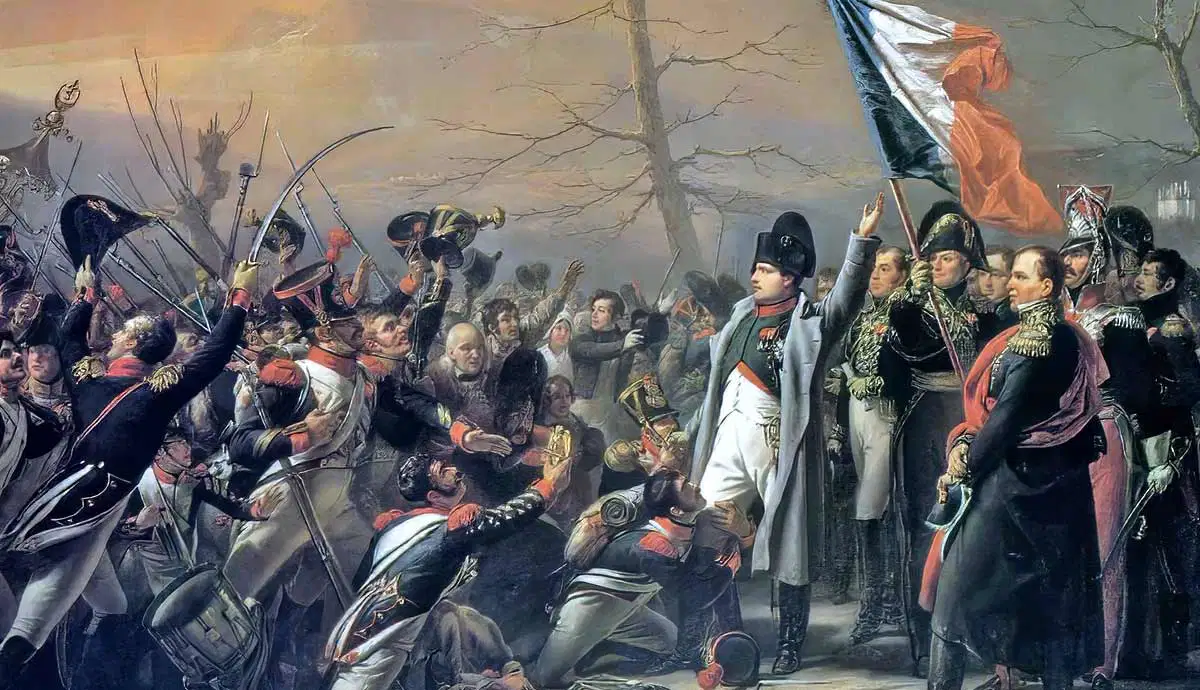
European nations quickly mobilized against him. On June 18, 1815, Napoleon was decisively defeated at the Battle of Waterloo by British and Prussian forces.
He abdicated again and was exiled to the remote island of Saint Helena in the South Atlantic.
Final Years and Death
Napoleon lived under British supervision on Saint Helena until his death on May 5, 1821, at the age of 51, likely from stomach cancer. In 1840, his remains were returned to France and buried at Les Invalides in Paris.
Legacy of Napoleon
Napoleon remains one of history’s most debated figures:
- A brilliant general whose tactics are still studied
- A lawgiver whose reforms shaped modern Europe
- An autocrat whose wars caused millions of deaths
He was both a child of the French Revolution and its undoing, spreading its ideals while ruling as an emperor.
Final Thoughts
Napoleon Bonaparte changed the course of European history more than almost any other individual. His rise from obscure officer to emperor showed extraordinary ambition and ability, while his downfall revealed the limits of military power and overconfidence. Whether viewed as a hero or tyrant, Napoleon’s influence on law, warfare, and politics endures to this day.

- News & Current Affairs
- Business & Economy
- Finance & Money
- Education & Learning
- Technology & Innovation
- Science & Environment
- Health & Wellness
- Food & Drink
- Home, Garden & Lifestyle
- Travel & Tourism
- Fashion & Beauty
- Art & Culture
- Entertainment & Media
- Sports & Recreation
- Personal Growth & Lifestyle
- Careers & Work
- Tutorials & How-To Guides
- Real Estate & Property
- Automotive
- Family & Relationships
- Environment & Sustainability
- Law & Legal Matters
- Gaming & Esports
- Religion & Spirituality
- Community & Local Voices
- Miscellaneous

 English
 Arabic
 French
 Spanish
 Portuguese
 Deutsch
 Turkish
 Italiano
 Russian
 Romaian
 Portuguese (Brazil)
 Greek
Greek
