


Mahatma Gandhi: The Power of Nonviolent Resistance
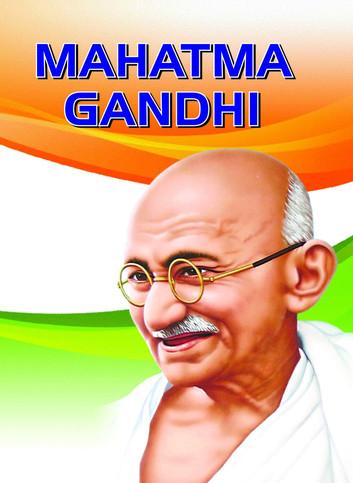
Mahatma Gandhi (1869–1948), born Mohandas Karamchand Gandhi, was an Indian lawyer and anti-colonial leader who transformed political protest through satyagraha - “truth-force”, a philosophy of nonviolent resistance rooted in ahimsa (non-harm). Rather than defeating opponents through force, Gandhi believed change could be won through moral courage, discipline, and the willingness to suffer without hatred.

Early Life and the Making of a Leader
Gandhi was born on 2 October 1869 in Porbandar, Gujarat, into a Hindu family. As a teenager, he entered an arranged marriage with Kasturba Gandhi, and they later had four sons. In 1888, he traveled to London to study law and was called to the bar in 1891. While in England, he explored vegetarianism and read widely on religion and philosophy, ideas that helped shape his lifelong focus on simplicity, self-control, and ethics.
South Africa: Where Satyagraha Was Forged (1893–1914)
In 1893, Gandhi went to South Africa for legal work and encountered harsh racial discrimination. A defining moment occurred when he was forcibly removed from a first-class train compartment at Pietermaritzburg, despite having a valid ticket. That experience pushed him toward organized resistance.
Over the next two decades, he helped unite Indian communities and led campaigns against discriminatory laws, especially the Asiatic Registration Act (“Black Act”), which required Indians to carry registration documents and submit to fingerprinting. Gandhi’s response was non-cooperation, mass protest, and accepting imprisonment without retaliation. By 1914, major concessions were achieved, and Gandhi’s reputation as a disciplined, fearless leader grew.

India: Leading a Nation Toward Independence (1915–1947)
When Gandhi returned to India in 1915, he became a central figure in the struggle against British rule. He promoted nonviolent mass movements that ordinary people could join - boycotts, civil disobedience, marches, and strikes, aimed at making unjust systems impossible to maintain.
Key campaigns included:
- Non-Cooperation Movement (early 1920s): encouraging Indians to boycott British institutions and goods.
- Salt March (1930): Gandhi’s long walk to the sea to defy the British salt tax became a global symbol of peaceful defiance.
- Quit India Movement (1942): demanding full British withdrawal, even as mass arrests followed.
Gandhi also fought for social reforms, including greater dignity and rights for Dalits, and urged religious harmony and community unity.

Death and Legacy
On 30 January 1948, Gandhi was assassinated in New Delhi. His death shocked the world, but his ideas continued to spread far beyond India. Gandhi’s approach influenced later movements for justice and civil rights, proving that nonviolence can be a form of strength, not weakness, when practiced with courage and consistency.
Final Thoughts
Gandhi’s life is a reminder that real power is not only found in armies or governments, but in principled action. His legacy isn’t just about India’s independence, it’s about the belief that truth, courage, and self-discipline can challenge even the strongest systems. Whether people agree with every aspect of his life and choices or not, Gandhi remains one of history’s most influential examples of how peaceful resistance can reshape the world.


- News & Current Affairs
- Business & Economy
- Finance & Money
- Education & Learning
- Technology & Innovation
- Science & Environment
- Health & Wellness
- Food & Drink
- Home, Garden & Lifestyle
- Travel & Tourism
- Fashion & Beauty
- Art & Culture
- Entertainment & Media
- Sports & Recreation
- Personal Growth & Lifestyle
- Careers & Work
- Tutorials & How-To Guides
- Real Estate & Property
- Automotive
- Family & Relationships
- Environment & Sustainability
- Law & Legal Matters
- Gaming & Esports
- Religion & Spirituality
- Community & Local Voices
- Miscellaneous

 Arabic
 French
 Spanish
 Portuguese
 Deutsch
 Turkish
 Dutch
Dutch
 Italiano
 Russian
 Romaian
 Portuguese (Brazil)
 Greek
Greek
